Meet Lu
From Playwork to Telepathic Communication
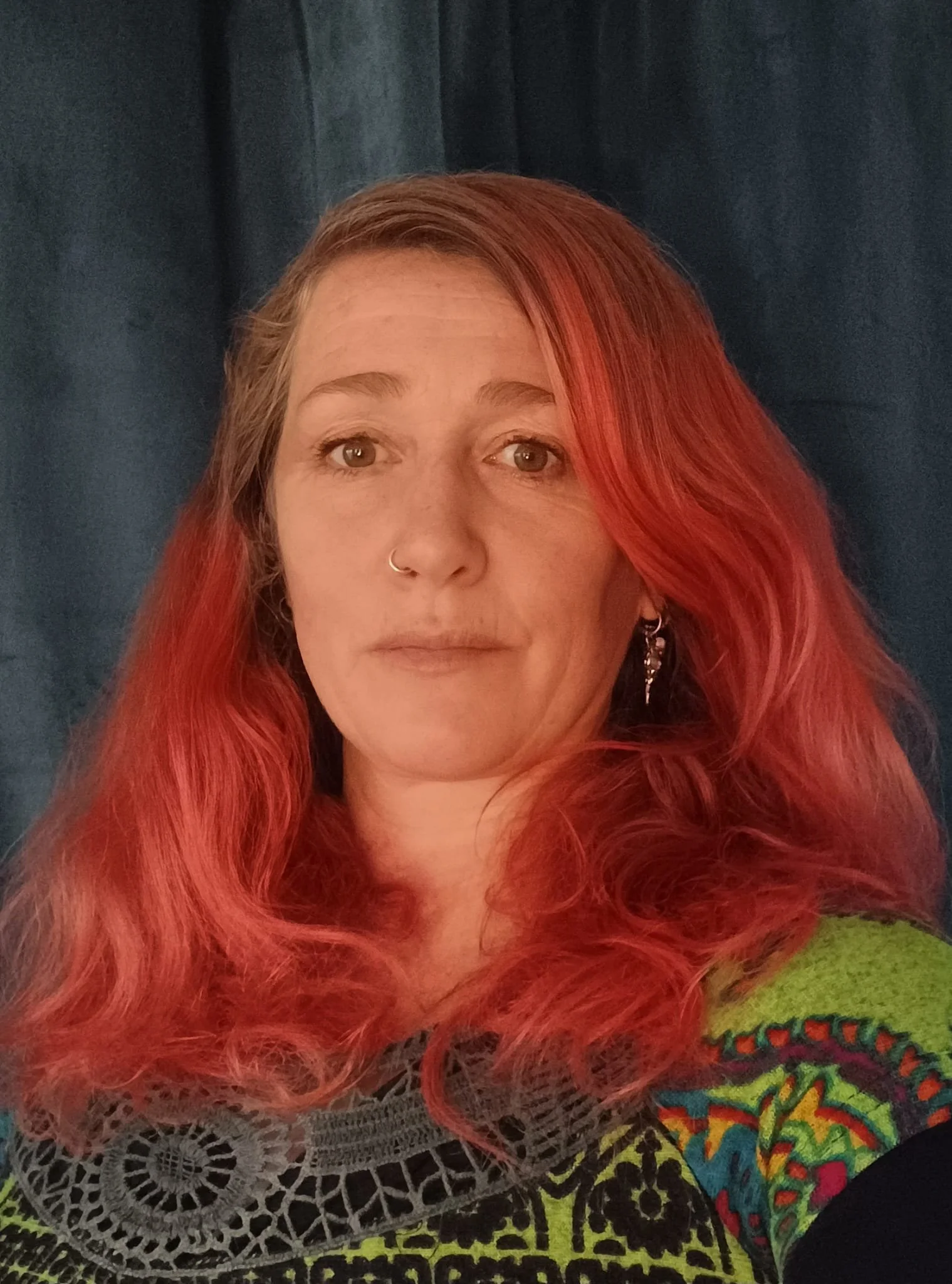
Louise Bromfield
Q: Tell us about where your journey began. What was your first role working with nonspeaking and disabled people?
Lu: It was playwork, which isn't a very well-known occupation. Playwork is quite specific, working in adventure playgrounds and allowing play to be led by the children themselves. You're not organising games and making children participate. They lead their play, and you're there to facilitate it, monitor the space and help make things possible.
I was specifically working one-to-one, two-to-one and sometimes one-to-four in a specialist SEND playground in London called Chelsea Adventure Playground.
It was amazing. There was water, sand, wild outdoor areas and indoor spaces. Children could run around, take their shoes and socks off and essentially be themselves. Some needed more support than others, whether that was personal care, having someone as a play partner, parallel play, or simply having someone nearby keeping them safe.
A lot of the children were nonspeaking, so that was where I first started spending significant amounts of time with people who didn't use spoken language and developing forms of communication that worked for us through play.
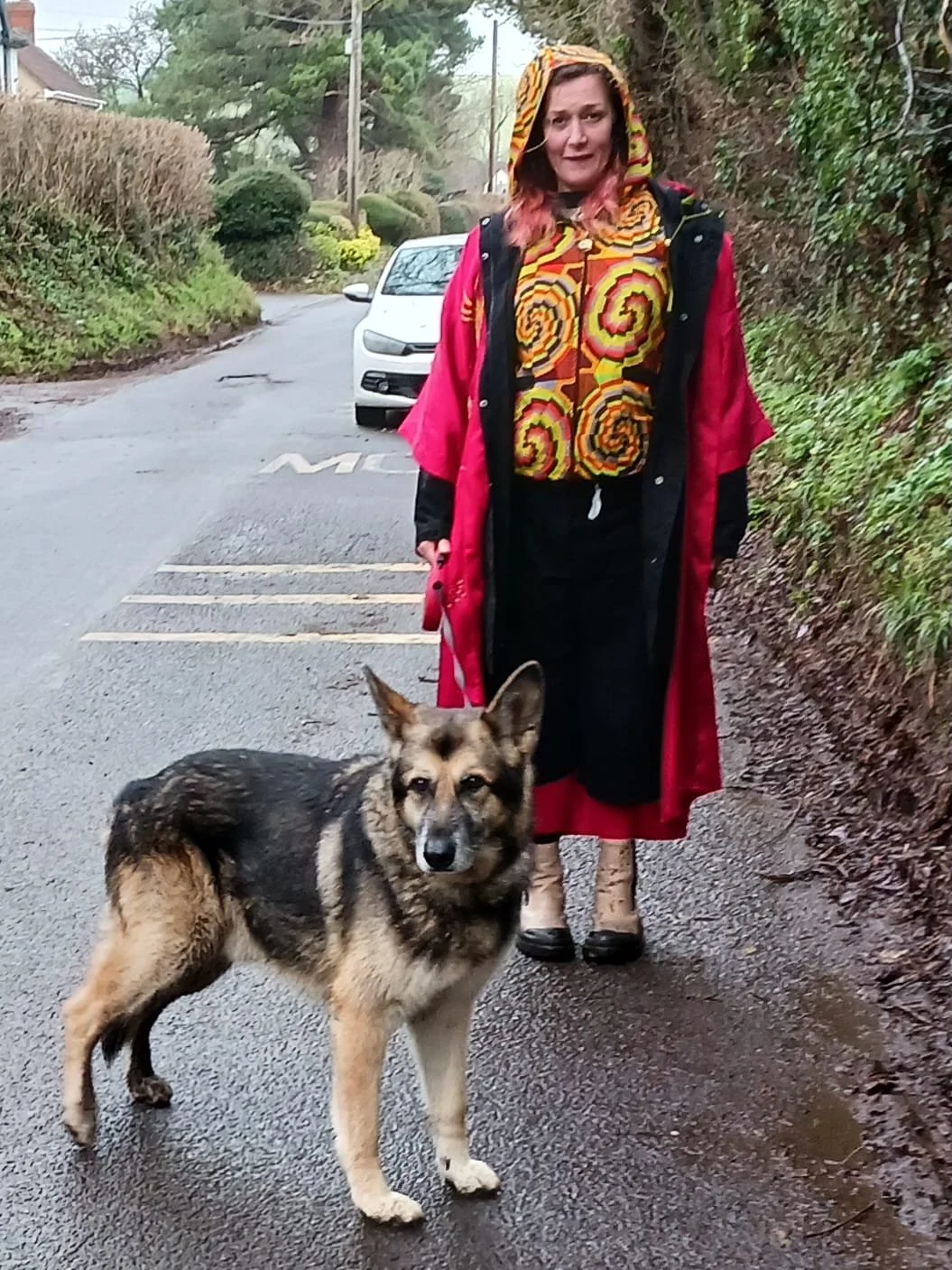
Lu and Jack
Q: What first drew you towards this kind of work?
Lu: Completely by accident!
I went to art college in London and when I finished, I didn't know what I wanted to do. I went to the job centre and they suggested joining an agency and becoming a care worker.
I'd always loved being around children, so through the agency I tried all sorts of jobs, teaching assistant, nursery assistant, care-home assistant and various other roles.
Then somebody I knew was working at the adventure playground and said, "Come here, you'll really like it."
I did.
I ended up doing that kind of work for about 15 years, across various locations.
Q: Looking back, what do you think those early years were teaching or preparing you for?
Lu: Definitely patience, and learning not to take things personally.
It was a huge introduction to autism, self-harm, the challenges parents can experience, and working with people who were beyond words.
Because it wasn't an academic setting and there weren't lots of rigid rules around how we had to interact, it gave me the opportunity to find my own way of connecting with people.
I developed some very deep connections with some of the children I worked with, and eventually that began to become a feeling of, Hang on a minute. There's more going on here.
Q: When did you first begin to realise there might be more happening in terms of communication?
Lu: I can't remember one exact first moment, but there were several experiences.
There was one little girl, who I'll call Child A, who I absolutely adored. She was considered very difficult to reach, but for some reason we were like two peas in a pod. She would cling to me, and although very few people seemed to know how to connect with her, we just did.
I can't even describe exactly how.
It started with a bond, a heart bond.
There was also Child B, who had cerebral palsy. He was very active in his wheelchair and loved playing word games. We developed games where he would kick a football towards specific letters and begin spelling out sentences.
Because he could give very clear yes and no responses, I started realising that once you establish reliable yeses and noes with somebody, you can begin having conversations. You can ask questions and receive confirmation.
Q: Was there a particular experience that demonstrated to you just how much nonspeaking children might understand?
Lu: Yes. There was a little boy, who I'll call Child C, who was about seven. He was tiny for his age, incredibly energetic, and spoke in his own language. He could become very distressed and difficult for people to support when he was upset.
One day I went into the quiet room with Child C and Child A. I picked up His Dark Materials by Philip Pullman, which obviously isn't a children's picture book, and simply started reading aloud.
Child A snuggled up beside me and Child C became completely calm and sat with us.
They were engrossed.
The story became really dramatic, involving two angels fighting and tumbling through the skies. At one particularly frightening moment, one of the children began crying.
I already felt that they understood much more than people realised, but that moment was incredibly powerful for me. There was a shared understanding and a shared peace between us.
Q: As those experiences continued, what forms did the communication take for you?
Lu: I would say clairsentience is probably my strongest sense.
It wasn't necessarily about hearing things.
There was one occasion when I was sitting near a sandpit. There were several children there and everyone was peaceful, absorbed in their own activities. I'd always been told these children didn't play or communicate with each other, that they were each in their own worlds.
One little boy, who I'll call Child D, came right up to me. He put his face against mine so our noses were touching and our eyes were completely locked.
Then he very, very slowly moved his face backwards while maintaining eye contact.
Something shifted in my perception.
Suddenly, I could perceive a connection between all the children. Although they appeared to be engaged in separate activities, I had this profound sense that there was awareness and communication occurring between them.
Over time, those experiences gradually began feeling more like conversations.
Q: Were you shocked or sceptical about what was happening?
Lu: Not really. I was engrossed.
I was completely in the zone and involved in their world. Vibrationally, it felt very comfortable for me.
It happened gradually, so there wasn't really a sudden moment where I thought, Oh my goodness, what's happening?
In fact, I didn't realise how immersed I'd become in their world until I began working somewhere else.
At one point, I simply started writing down what I felt Child E was saying to me. At the time, I hadn't even recognised that I'd reached a stage where doing that might be considered unusual.
I felt he wanted me to give a message to his mum, which I did.
Unfortunately, she became very angry and upset, and I wasn't able to work there or see him again.
That experience showed me that not everybody was ready or comfortable with this way of understanding communication.
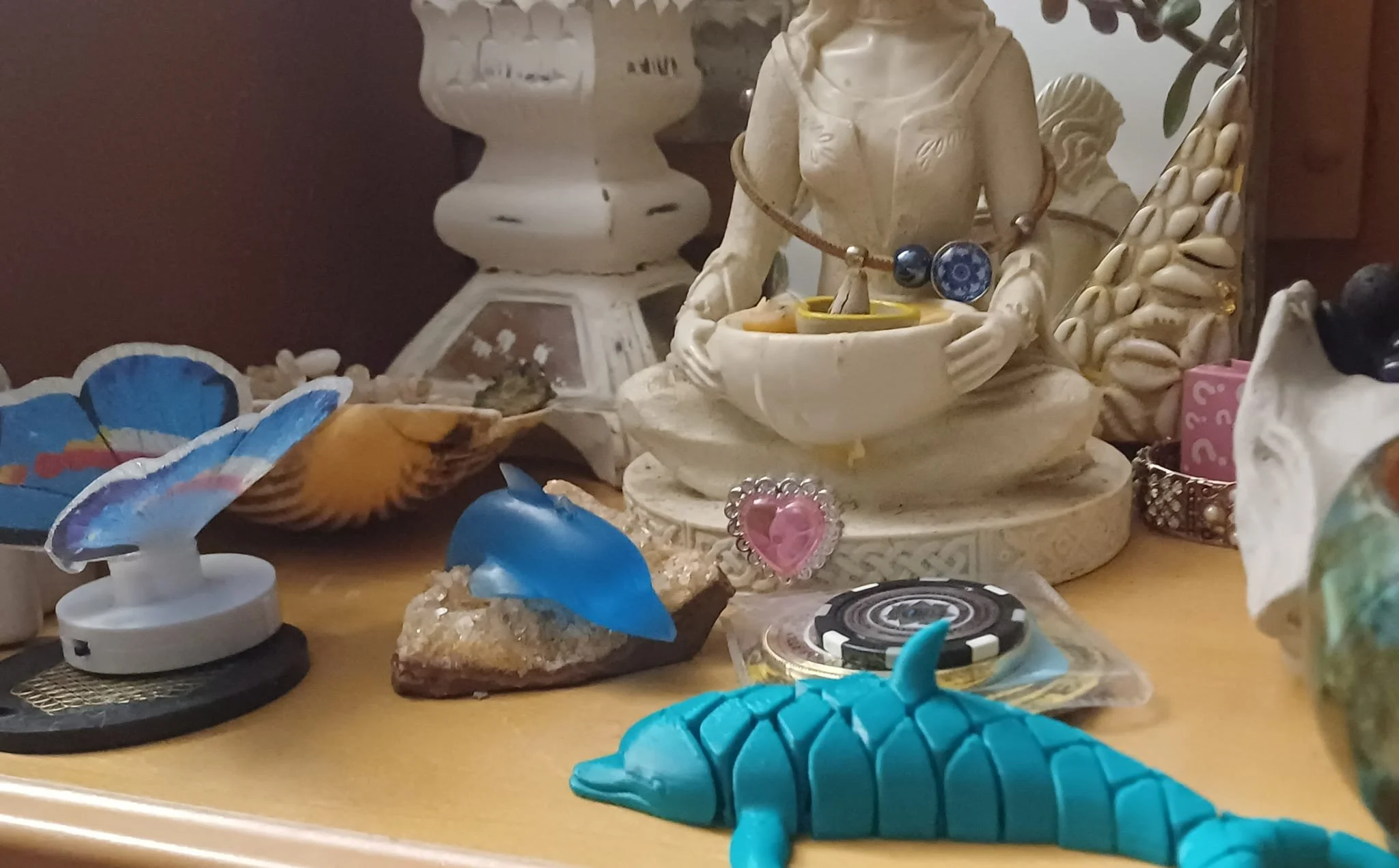
Lu’s collection
Q: Did you begin researching what you were experiencing?
Lu: Yes. I discovered Suzy Miller and communicated with her a little, and that helped me begin forming a bigger picture around what I'd been experiencing.
Then, for a while, I put the whole thing into a box. Life moved on and I became involved in other things.
But it hadn't really gone away.
Q: Looking back, were there signs that you were intuitive even earlier in life?
Lu: Looking back, yes, although I didn't think about myself that way at the time.
I remember being a little girl and singing to flowers.
I had lots of experiences involving nature, communicating with trees and animals. I grew up around a lot of nature. We lived in the New Forest and also in the Middle East, where I spent a great deal of time by the sea.
So my early years were actually very much about communicating with nature.
When I was 16, I also made a choice not to follow the very rigid educational path my dad wanted for me. Instead, I chose a sixth-form college in the middle of the forest.
I'm certain that decision led me towards people and experiences that created a network through which I could begin exploring the non-physical world.
Q: Was there another experience later that brought telepathic communication back into focus for you?
Lu: Yes. I was at a festival called the Green Gathering. It was dawn or very early morning and I was walking when I saw somebody sitting in a wheelchair, who I'll call Person A.
There was a very clear telepathic communication between us.
It blew my mind because it had been several years since I'd worked at the playground, so this was happening in a completely different environment.
His parents came out of their tent. I looked at them, smiled and gestured towards their son with my eyes.
They nodded at me as if to say, Yes, we know.
That was a beautiful moment.
Q: You later returned to residential care. How did that affect your understanding of these experiences?
Lu: The really mind-blowing experiences began happening more recently while working in residential care with nonspeaking adults.
The telepathy began again, but this time much more intensely and with much more clarity.
I spent several years communicating with people there and have books and books of writing from those experiences.
Then, with things like The Telepathy Tapes bringing these conversations into the open, I began to feel that perhaps there was finally a place where I could be more open with families about what I had experienced and the role I might be able to play.
Q: Alongside your care experience, you've also worked therapeutically for many years. Tell us about that.
Lu: I've been a shiatsu therapist for around 20 years.
Shiatsu is a form of bodywork based on the acupuncture system and Chinese medicine. It's touch-based rather than projecting energy onto somebody. I think of the energetic system almost like the circuit board of the body.
It can be used to support nervous-system regulation and various physical and emotional issues.
I was training in shiatsu while working at the playground, so those two strands of my life developed alongside one another.
I've noticed that even with young autistic people who might not ordinarily want to be touched or sit still, sometimes when the environment and connection are right, they can surprise everybody.
Q: What might working with you look like for a nonspeaking person and their family?
Lu: One way I've been describing it is Field Coherence Translation.
It's about sensing what's happening energetically within a social or relationship dynamic and offering guidance based on everything I've learned through playwork, wellbeing practices, spiritual practice and meditation.
I can offer parents tools to help with regulation within relationships and potentially use telepathic communication to offer guidance about what the person beyond words may require for that relationship to become more regulated.
I have a large wheelchair-accessible space in London where there's plenty of room for people to move around.
I've also worked over Zoom. It's easier once I've physically met somebody because a connection has already been established, but remote work can be possible too.
One young person I'm currently working with, who I'll call Young Person B, had met me previously on Zoom, although not for personal sessions. He then came to me in my dreams and, in my experience, gave me messages for his mum. That was actually what initiated our sessions.
Q: Consent is obviously incredibly important when you're working in this area. How do you approach that?
Lu: Consent is probably the most important thing.
I don't want to intrude into people's worlds. I don't want to bombard somebody with what I perceive as telepathic communication if they don't want to receive it.
I want everybody involved to feel comfortable with the communication taking place.
Consent can be missed in very subtle ways, so it's a massive consideration for me.
And that consent needs to exist for both parties, the parents and the young person themselves.
Q: Another area you're passionate about is mental capacity. Why is that so important to you?
Lu: Through working in the care industry, I've become very aware that there can be a threshold at which somebody is considered not to have mental capacity.
I think it's fundamental that people are given every opportunity to demonstrate their mental capacity before decisions with potentially huge consequences are made.
I've met parents who have spent their child's whole life being told one story by well-meaning medical practitioners about their child's capabilities. That becomes their accepted reality, and emotionally it can be a massive shift when that understanding changes.
I'm developing an idea called The Blue Butterfly Collective which is about bringing play and creativity into opportunities for demonstrating capacity.
Rather than somebody having to sit in an unfamiliar room and demonstrate specific abilities on demand within 15 minutes, I'd love to see softer, more playful and relaxed opportunities where people are given the time and circumstances in which they can show what they're capable of.
It's also about helping people have greater agency around their own bodies, medicine and therapies, and creating opportunities for consent-based choices.
Q: What would you say to a parent who is curious about telepathic communication but also nervous or sceptical?
Lu: It doesn't hurt to try.
If you do try, you might learn something that could change your relationship with your child forever and bring both of you a level of joy and connection you didn't believe was possible.
And there may be nothing in it. We might all be a bunch of quackos, and that's okay! We don't mind if you think that.
But there are people putting a huge amount of themselves into trying to help these children have their voices heard.
So give it a go and see.
If it's real for you, I think you'll feel it in your body and in your heart, and your child will let you know, because it's important to them that you understand them.
Q: If you could go back and speak to your younger self, what would you tell her?
Lu: Be brave.
Speak your truth.
Don't worry about what anybody else says.
Do what you know is right.
You'll always do it anyway, so you might as well enjoy it and stop feeling guilty about it.
Q: Outside this work, what makes Lu, Lu? What makes you smile?
Lu: Singing! Singing is great.
All the little things, flowers, animals, songs. Watching children play always makes me smile.
I'm also a bit of a clown!
I dress up, wear costumes, paint my face, dance around on stage and sing songs about changing the world.
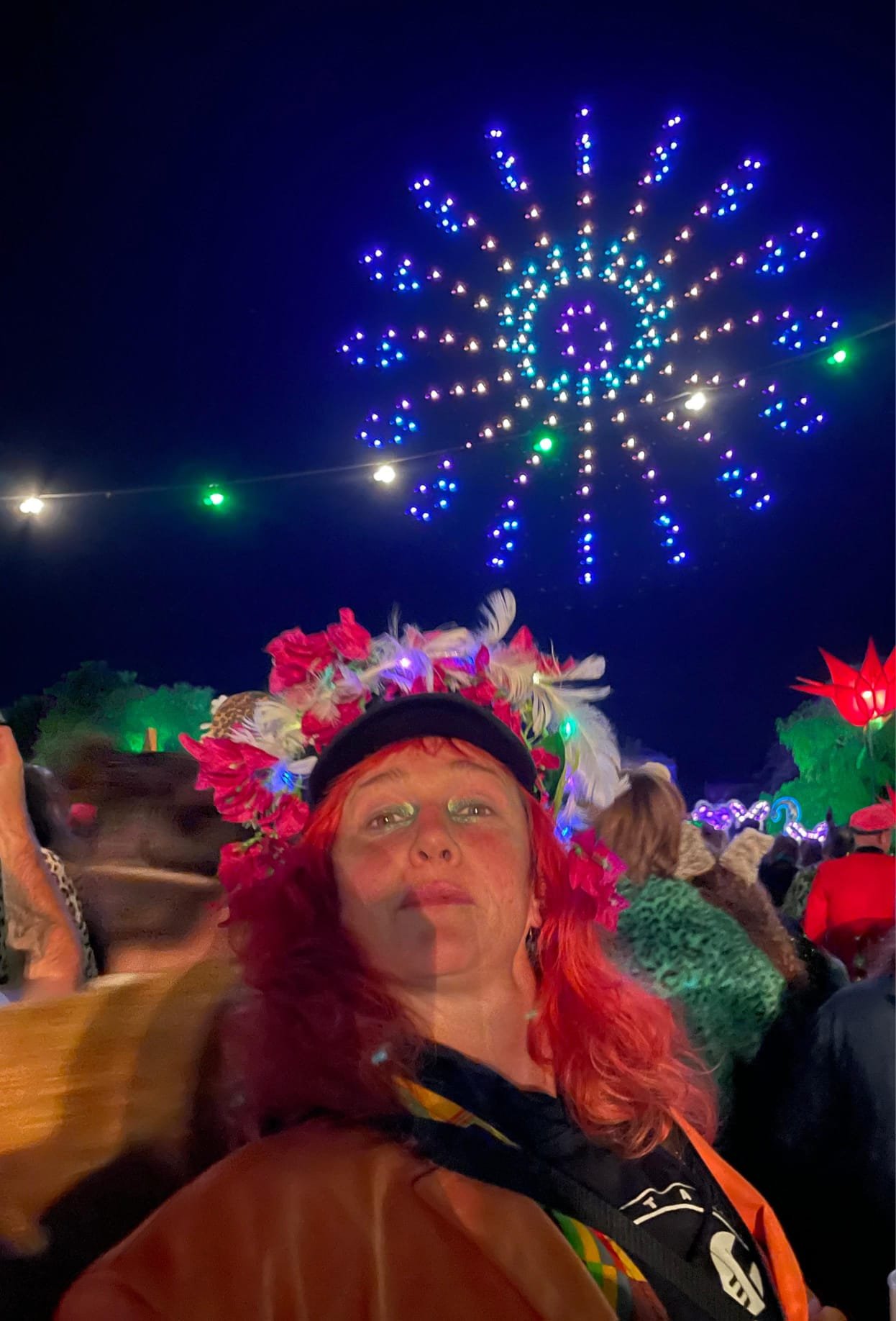
Festival night!
Q: After such a long journey, what message would you like to leave with families reading your story?
Lu: I never foresaw arriving at the point where we are now.
There has been about a 20-year journey between those early experiences at the playground and where I find myself today.
A few years ago, when the telepathy began happening again much more intensely and with greater clarity, it felt as though I'd come full circle.
Sometimes we don't know where we're going or why we're going there, but we're following something. We're following a pattern that's bigger than us.
And when we arrive at the place where the pattern begins to make sense, that's the time to take action.
That's where I feel I am now.
A woman I worked with, who I'll call Client A, was unable to advocate for herself and asked me to advocate for her. In my experience, the instruction was incredibly clear. I couldn't say no.
The promise I made came from my heart. It was on a soul level.
Who knows what's going to happen?
Sometimes in life, you've simply got to do the right thing.
Q: Finally, what are your hopes for the future, both personally and collectively?
Lu: Personally, I'd like to be happy and grounded and have a nice home. I'd like to share my life with great people who are on the right wavelength, and I already do.
I'd like to help facilitate whatever it is these guys want us to facilitate, while hopefully balancing that with some time for my own creativity.
For example, there's a young nonspeaking person, who I'll call Young Person C, and we're currently working towards getting funding so that he can make an album using eye-gaze technology. That's what he wants to do.
So let's go out there and try to make these things happen.
It's a network. We have to work together.
And collectively?
Unity.
Unity consciousness.
Let's get together, work together, and help each other evolve our consciousness, hand in hand.
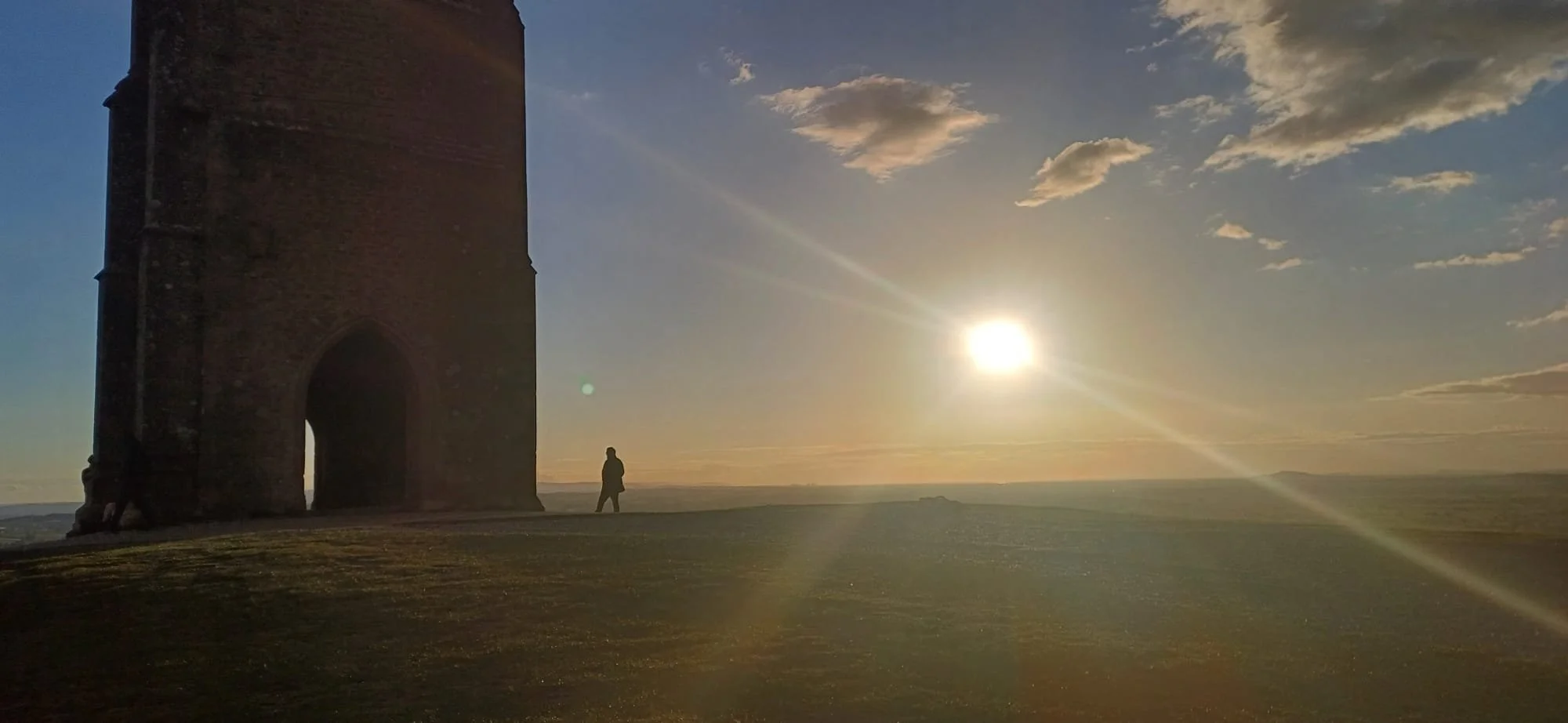
Sunset over Glastonbury Tor