Noriko Matsubara
Creativity, Connection and Peace
Q: How would you introduce yourself to someone meeting you for the first time?
A: I'm a mum of two, a wife, and a children's book author and illustrator. I also run Japanese art workshops and teach Japanese culture and language. On my YouTube channel, I teach Japanese using the characters from my children's books.
I notice that I'm telling you what I do rather than who I am! But these are all important parts of my life.
Q: Where did your love of art and storytelling begin?
A: I grew up in a rural area in the north of Japan. My parents' house was surrounded by rice fields, and I used to play there, catching tadpoles and frogs. I loved being surrounded by nature, and it still inspires my art.
I always loved drawing and making up stories. I spent a lot of time in my own imaginary world, drawing the stories I was imagining. When I was young, I wanted to become a manga artist, but my father didn’t like the idea.
My parents were both civil servants, and they believed that a stable life was the best thing for me. To them, becoming an artist felt like a gamble. My father discouraged me, and I began to doubt whether I had enough talent to become an artist.
I was quite obedient, so I listened to my parents and my schoolteachers. They encouraged me to go to university and become a teacher, and that was the path I followed. I trained to teach Japanese, rather than art.
But I didn’t become a teacher in Japan. Instead, I went to Lebanon to teach Japanese. While I was there, a series of events made me want to express my true feelings, and I began drawing again. I made the decision to walk on my own path. Eventually, I made the decision to follow my own path.
Two years later, I went to art school. That was when I began to realise that I really could draw. It felt as though I was discovering a gift I hadn't allowed myself to use before.
Q: You eventually studied art in Canada. How did you come to live in England?
A: Because of a man, my husband!
The Canadian university where I was studying had a small campus in Essex. One summer, I came over to study British art history, and we went on a day trip to Cambridge.
Our teacher invited us to go punting. Normally, I would have joined in, but that day I didn't feel like going. I went back to the station with a few friends instead, and the trains weren't running because something had happened.
One of my friends asked a man nearby what was going on. That man is now my husband.
I hadn't planned any of it. I had never even thought about living in England!
Q: Tell us a little about your family now.
A: My son, Ichiro, is fourteen, and my daughter is ten. They are both curious and creative, but they are very different from each other.
Ichiro has always been calm and quiet, but he knows what he loves. Sometimes I feel that he is an old man in a child's body, and that I'm the child and he's the grown-up! He's very wise.
He has loved drawing since he was little. In his spare time, he would draw and draw. I think he's much more gifted than I am. He also loves deep-sea creatures, so I wonder whether his future will involve art, marine life, or perhaps both.
My daughter is pure joy. I’ve always felt that she’s like a ray of sunshine. She’s a real chatterbox, too! She is always busy making something, and I really admire her energy and productivity. The only downside is that there’s usually a huge mess behind her, and I end up telling her off!
Both children speak fluent Japanese, and we speak Japanese together at home. That’s very important to me because it helps me feel connected to Japan and to my roots.
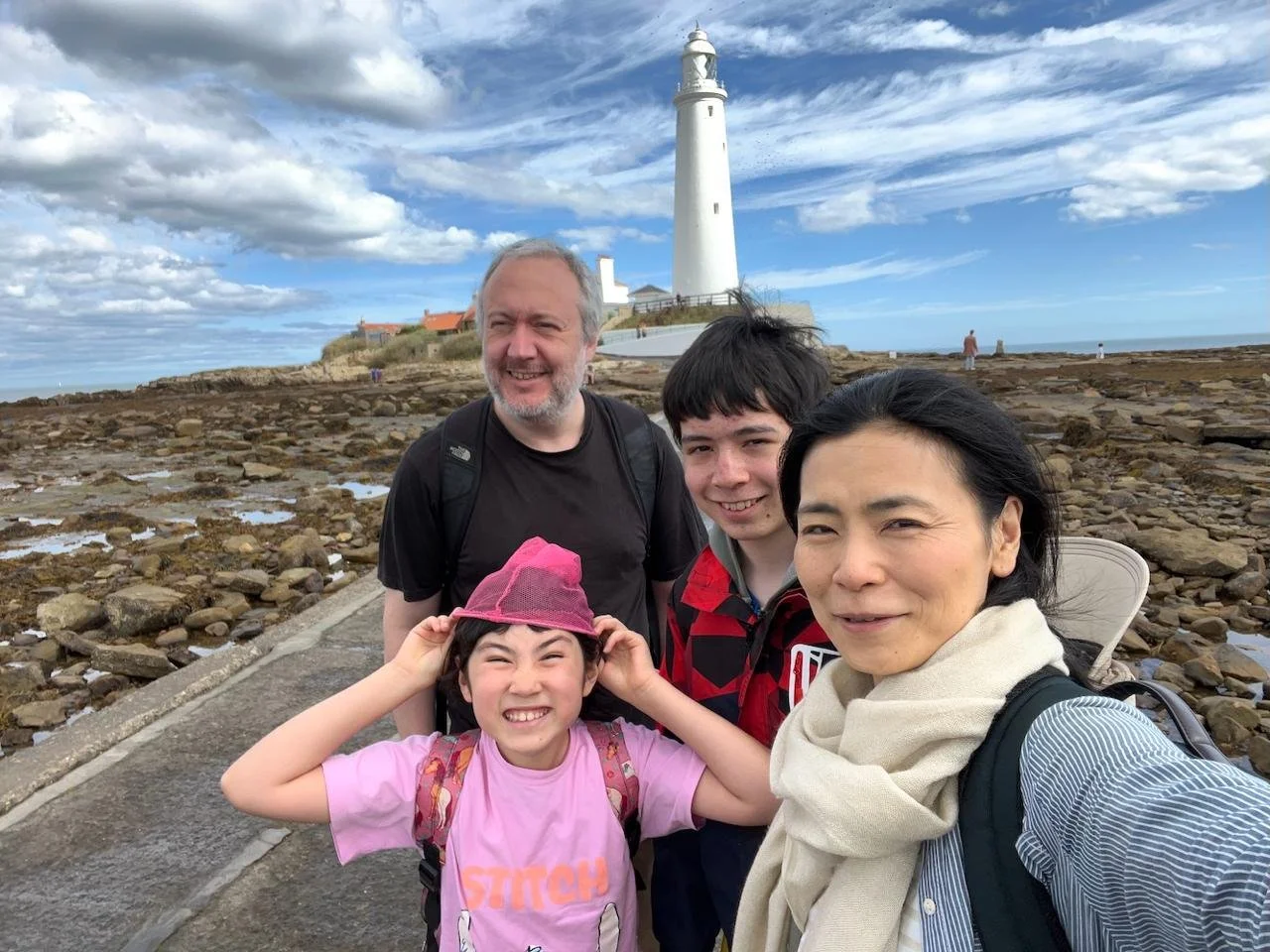
Meet Noriko and her Family
Q: You also returned to manga during lockdown. What did that bring to your family life?
A: When lockdown happened in 2020, I was frustrated because the children were at home and I couldn't do my work. When I complained to my husband that I had very little time for myself, he said, “Why don't you treasure this time? You won't get this time again.”
I thought that was a good way to look at it. So I decided to put my work aside for a while and focus on our family. Then I realised I could document our everyday life through manga, as little comic strips.
It wasn't a sophisticated manga. It was just something fun for me. But once I started finding humour in our everyday moments, I didn’t feel so frustrated anymore.
If the children did something naughty, or something that might previously have upset me, I could laugh and think, “That could become a manga!” Those drawings are on my website. I haven't done anything further with them yet, but you know what? I think my manga style has become a kind of foundation for my book illustration.
I really enjoyed black-and-white line drawing, and I used that style when I illustrated your book.
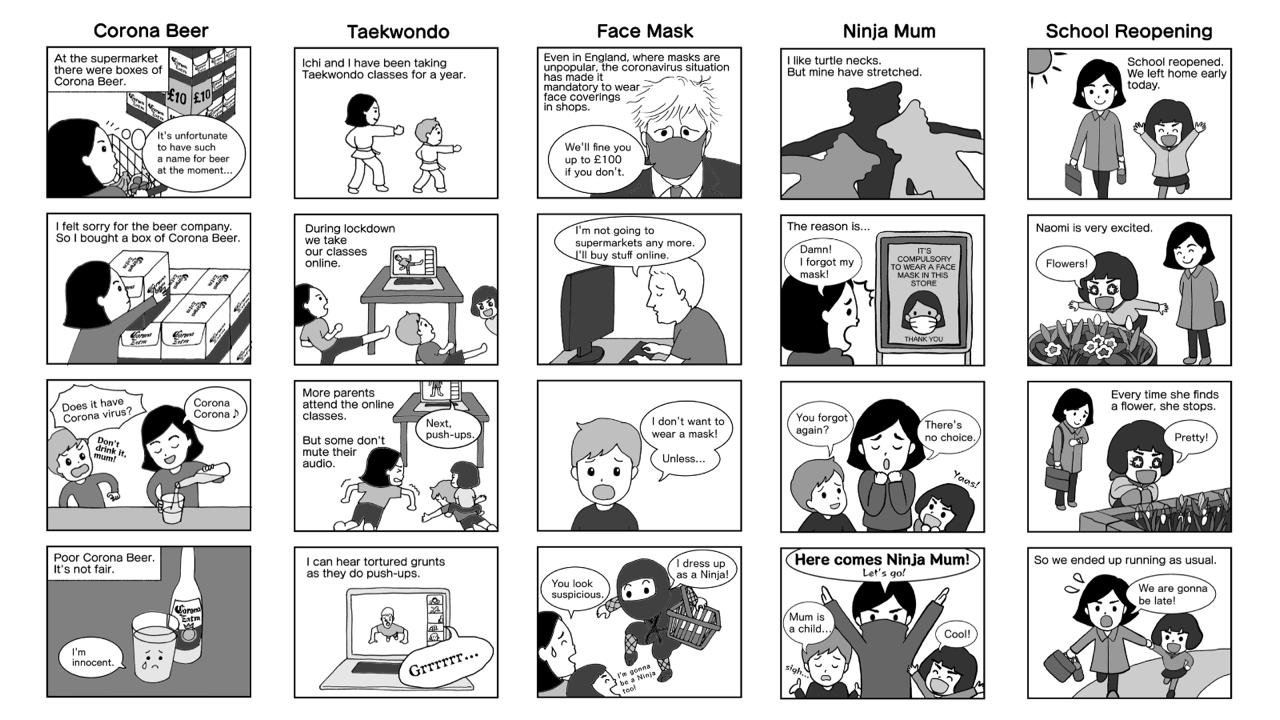
Finding Humour in Everyday Family Life
Q: How does Japanese culture come into your art and teaching?
A: Japanese culture is a very important part of my art and teaching, but I don't always try to make my work look traditionally Japanese. For me, it's more about the way I see the world—the connection with nature, simplicity, and finding beauty in everyday things.
One of the art forms I practise and teach is chigiri-e. It's a Japanese paper collage technique where you create pictures using hand-torn pieces of paper. Traditionally, you use Japanese paper called washi.
When I was living near London and travelling into the city, I noticed there were lots of Metro newspapers left behind on the Tube. Washi can be expensive and difficult to find in England, so I started collecting the newspapers and using them as art materials. I discovered that they could give a similar texture to washi.
I often create chigiri-e inspired by the natural world. I love the contrast between the traditional Japanese technique, the everyday British newspaper, and the natural world as my subject. In a way, it reflects my own life—bringing my Japanese background together with the place where I live now.
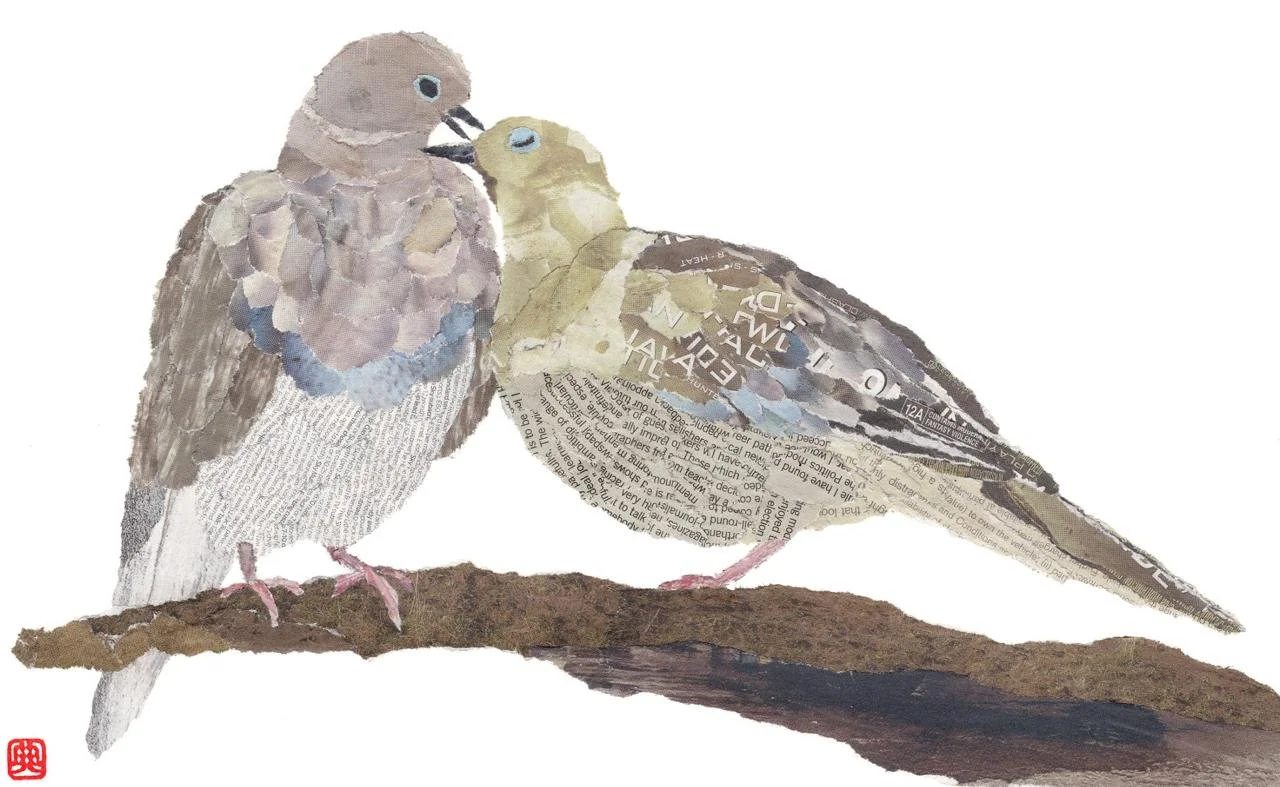
Nature in torn paper; The art of Chigiri-e
I think that's also something I try to bring into my teaching. I want people to experience Japanese culture, but also to feel that they can make it their own and connect it with their own lives and experiences.
Q: Where did Bocchi and Pocchi come from, and why did you choose socks?
A: They came from a childhood memory of my grandmother.
My parents were busy working, so my grandmother, who lived with us, looked after me and my sister. I was very clumsy, and I still am! I often fell over and made holes in my trousers or socks. Whenever my socks had a hole, I took them to my grandmother, and she mended them.
There's a character in my stories called Grandma Mouse, and she is based on my grandmother.
I think having my socks mended made them feel special to me. I became attached to them. Later, I began wondering about a pair of socks as characters. They could be brothers, sisters or friends. What would happen if one of them developed a hole and went missing? How would the other sock feel?
The story started growing in my imagination, and that was how Bocchi and Pocchi were born.
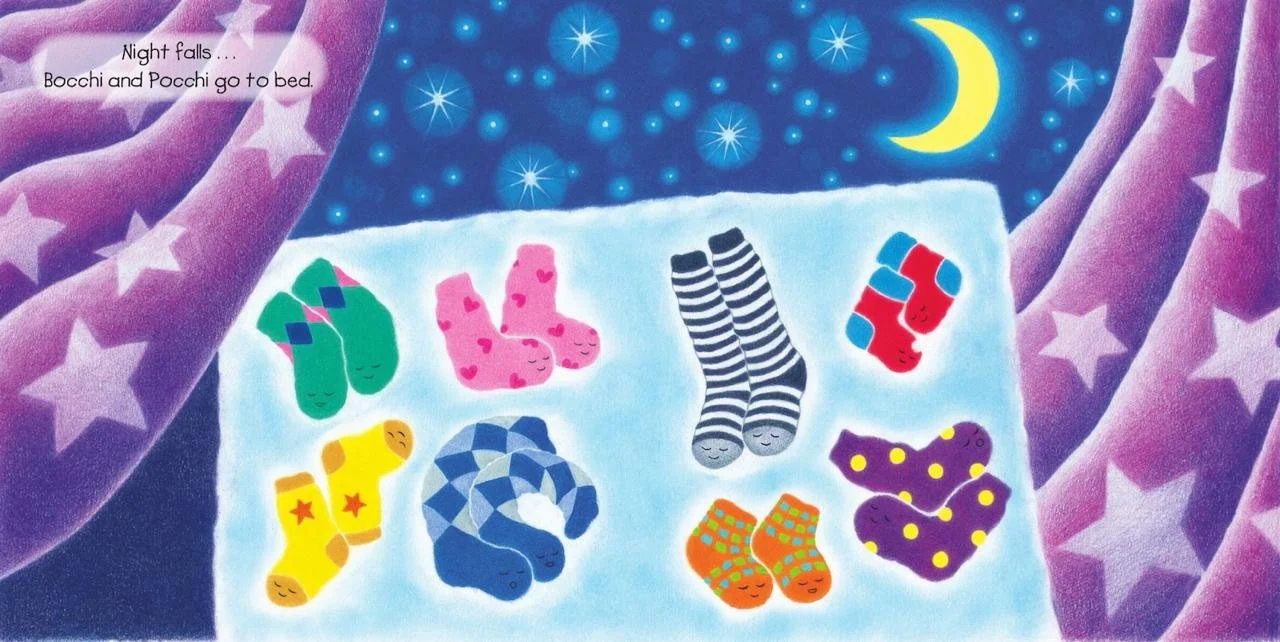
Bocchi and Pocchi; a series of children’s books
Q: You illustrated a story for the BBC's CBeebies Storytime app. How did that opportunity come about?
A: During COVID, a BBC producer contacted me on LinkedIn. They were developing a Storytime app and looking for illustrators.
At first, I wondered if it was a scam! But I was curious, so I replied, and we arranged an online meeting. Then I realised the project was real.
They paired me with an author whose story was about a blind girl with special abilities connected to her other senses. Looking back, it’s interesting that I was already working on a story about a child whose abilities went beyond what people might first assume.
There was also a practical challenge. Until then, I had always drawn my illustrations by hand, using coloured pencils. One of my own books could take me a year to illustrate, but I had only about a month to illustrate an entire story! There was no choice, I had to go digital.
I bought an iPad and taught myself digital illustration through YouTube tutorials. I had already said yes, so I had to find a way!
Then another lockdown began. My son needed my computer for school, and my daughter needed my iPad for her lessons. During the day, I had no tools to work with, so I drew at night.
It was quite a challenge, but I completed the work on time, which was a huge relief!
Q: There was another part of that experience that took courage. What happened when the app was released?
A: I was very excited to download the app and see the finished story. But when I opened it, I saw the author's name and no illustrator's name.
I looked at the other books and noticed the same thing. My understanding was that the project was meant to promote young and lesser-known artists. I felt that without our names being included, it would be difficult for us to show people our work. We also hadn't retained copyright in the artwork.
I didn't want to upset the producer, and standing up for myself has never been easy. But it didn't feel right. I gathered my courage and contacted him to say that all the illustrators should be credited.
He listened and took it back to the team. Then he came back and said that they had decided to include credits for all the illustrators.
The next time I opened the app, both the authors' and illustrators' names were there.
I was so proud of myself. In some ways, I felt happier about having spoken up than I did about completing the artwork. It was a big step for me, and it helped the other illustrators too.
Q: You were already very busy when the opportunity to illustrate our book came along. What made you say yes?
A: There were several things happening around the same time that felt connected.
I was making Japanese lesson videos with Bocchi and Pocchi, and I began receiving messages from parents of autistic children. They said their children were enjoying learning Japanese through my videos.
One mother told me that her son hadn't been speaking, but after discovering the videos, he wanted to learn Japanese and began speaking Japanese. She was very surprised and grateful. I hadn't set out to support autistic children, so receiving those messages made me stop and think.
I was also part of an online community connected with the Japanese author Ken Honda. During one of our conversations, I mentioned these messages, and someone asked whether I had heard of The Telepathy Tapes. That was another conversation bringing autism into my awareness.
Then a friend posted on Telegram that someone she knew was looking for an illustrator. I hadn’t opened Telegram for a few months, but I happened to open the app that day, and the message made me stop. I replied, and that led me to you. When you told me about Kody and Aron, I felt that all these things were coming together.
Ken Honda says that if you encounter three coincidences, they’re not really coincidences, but a synchronicity. That was how it felt to me. I was very busy, and without those earlier experiences, I don’t know whether I would have said yes. But this time, I thought, “Okay, I’m in.”
Q: How did you feel when you first joined the project?
A: At first, I felt a little out of place.
You and Mich seemed very intuitive, and so did Kody and Aron. I had always wanted to be more intuitive, but I felt that my logical side was stronger. I didn't hear voices or see visions, and I had very little experience working with autistic children.
I wondered, “Am I okay to be here? Have they chosen the wrong person?”
That changed through our conversations. Through Mich, Kody and Aron communicated that they had wanted me on the team. That was very reassuring.
Q: Did working with them help you trust your art more?
A: Yes. When I illustrate my own stories, I'm the author, so I know what I want. When I'm drawing for somebody else, I can start to worry about being judged.
I keep wondering whether the author is happy, whether the picture is right. With this project, I kept wondering whether Kody and Aron were happy with what I was drawing.
Then, through Mich, Kody and Aron encouraged me to trust myself. They told me I was doing a great job. I felt they understood what I was worrying about.
I needed that reassurance, and I needed to believe in myself. They helped me understand myself better and trust myself more.
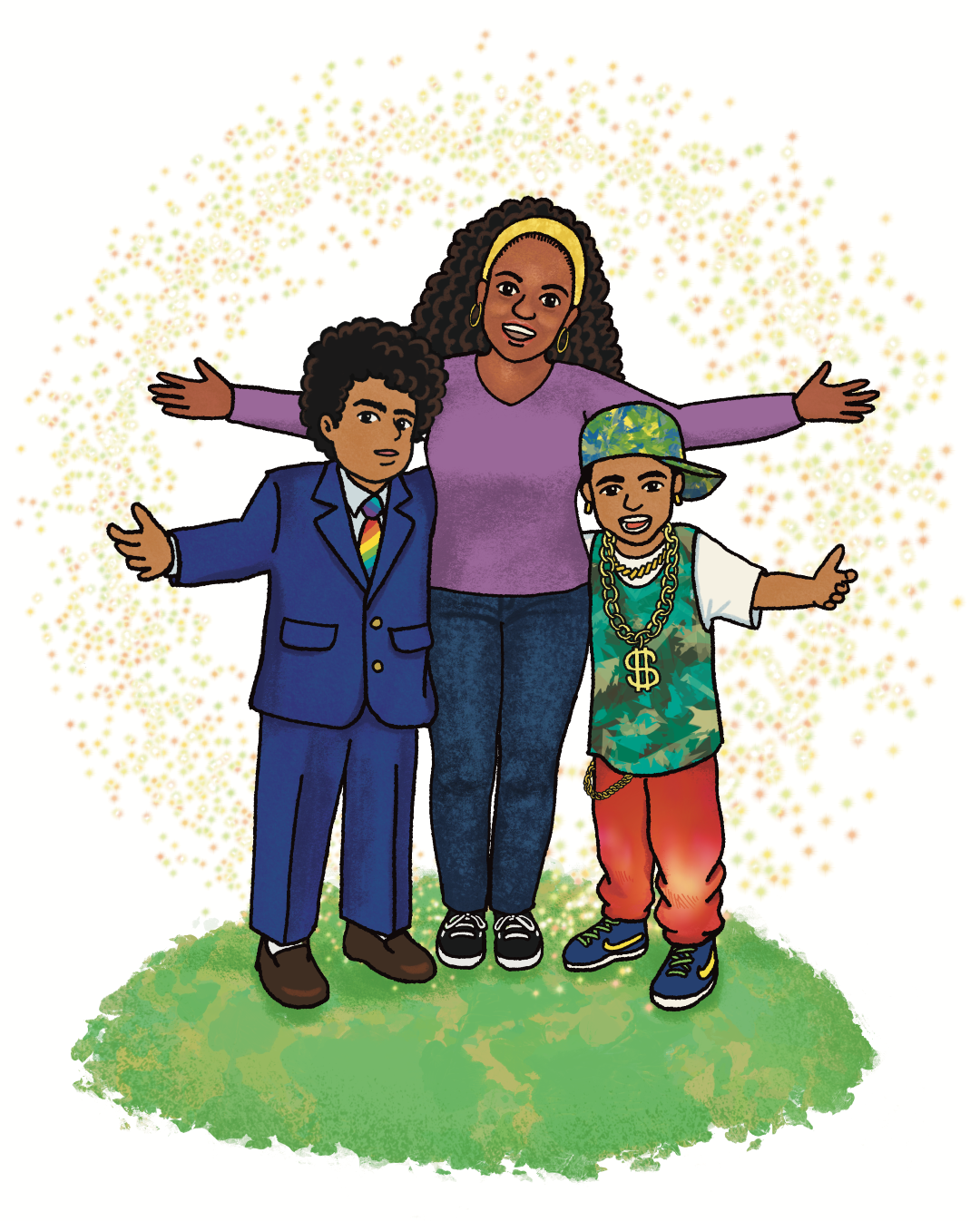
Bringing our story to life
Q: Has knowing Kody and Aron changed the way you look at children and other people?
A: Yes. You can't underestimate children. Being older doesn't automatically mean that you know more.
I was already learning a lot from my own children, but with Kody and Aron, it felt like a leap. I felt they were so far ahead of us in many ways.
One of the biggest things I've learnt is that you cannot judge somebody by their appearance. There can be a whole universe inside a person that you don't see from the outside.
You might assume that someone doesn't understand or isn't aware, but how do you know? Working with Kody and Aron helped me recognise how much wisdom can be there, beyond what is visible on the surface.
It reminds me of the idea in The Little Prince that the most important things aren't always things you can see with your eyes.
Q: You spoke about peace as something close to your heart. Where did that begin?
A: I think peace has been a theme for me since childhood.
When I was about thirteen, I read a manga about the life of Buddha. I was so moved by it that I wanted to become a Buddhist monk. I wanted to experience enlightenment and understand why we live. What is our purpose? What are we here for?
The world seemed like such a mess, and I wanted to know how we could achieve world peace.
Then I thought about having to shave my head, and I didn't want to do that! So I didn't become a monk. Perhaps my motivation wasn't quite strong enough!
But those questions stayed with me. I've continued thinking about peace, and more recently I've realised how much it begins with our inner life.
Q: What has working with our family added to that understanding?
A: I've come to feel that we have to start with ourselves. Trying to fix everything outside us, without looking within, doesn't work.
What Kody and Aron have been teaching us helps us find our own peace. When we are peaceful inside, that can affect the people around us. If we're struggling within ourselves, it's harder to help others find peace.
That is something I've learnt from them. These children really are our teachers.
Q: How would you like your creative work to contribute to that peace?
A: I would love to help families experience more peace and happiness together.
When a parent and child share a book, they can have a lovely moment together. I think that time is very precious. A child can carry the memory of it through life.
I feel that when people are happy within themselves, they are less likely to want to hurt others. So creating those happy moments matters to me.
Helping a family enjoy a story together might seem like a very small contribution to world peace, but it is something I can do through my work.
That's what I would love to keep doing.